


KEY TAKEAWAYS
- Financial markets repeatedly showed their resilience during the Second Quarter 2026, producing stellar returns for public equities but leading some to question whether investor optimism has once again given way to “irrational exuberance.”
- For the quarter, U.S. large-cap equities (S&P 500) were up +15.2% while U.S. small/mid- cap stocks (Russell 2000) surged +21.5% in one of their best quarters ever. International equities (MSCI All-Country World Index ex-U.S.) rose +14.5% in Q2, with Emerging Market stocks (+24.1%) outperforming Developed Markets equities (+10.8%).
- Several near-term investment risks have evolved, even as new medium-term risks have emerged around AI-driven equity valuations, inflation levels, monetary policy under new Chair Warsh, private credit worries, and uncertainties around U.S. midterm elections.
- Overall, we continue to suggest multi-generational investors maintain broad diversification and trim overweights in public equities (where feasible, given tax constraints) while maintaining ample liquidity to fund near-term goals during inevitable bouts of volatility in equity and fixed income markets.
Review of Q2 2026
Financial markets repeatedly showed their resilience during the Second Quarter 2026, producing stellar returns for public equities but leading some to question whether investor optimism has given way to “irrational exuberance1” and created expectations unlikely to be met by future asset returns.
- Global equity markets surged in Q2 as AI-related investments continued to drive performance, despite the military conflicts in the Middle East and Ukraine.
- For the quarter, U.S. large-cap equities (S&P 500) were up +15.2% while U.S. small/mid-cap stocks (Russell 2000) surged +21.5%. International equities (MSCI All-Country World Index ex-U.S.) rose +14.5% in Q2, with Emerging Market stocks (+24.1%) outperforming Developed Markets equities (+10.8%).
- Equity investors continued to shift their attention during the quarter from the hyperscalers and software companies to AI platform companies and chip manufacturers benefitting from the surge in AI-related capital expenditures. This shift is reflected in YTD performance, as the return of the S&P “493” (S&P 500 minus the Magnificent 7 mega-tech behemoths) stood at roughly double that of the Magnificent 7.
- Near the end of the quarter, the U.S. and Iran agreed to a temporary ceasefire, and energy prices fell sharply toward their pre-conflict levels.
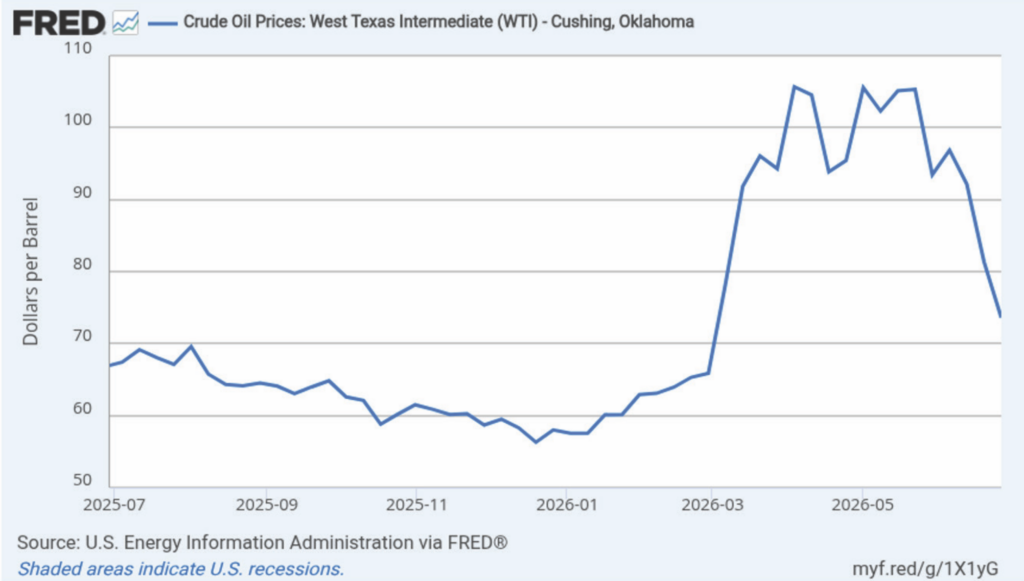
- In U.S. bond markets, the Barclays Aggregate Index returned +0.7% in Q2 as yields traded in a relatively narrow range despite numerous risk factors, including the change of leadership at the U.S. Federal Reserve and rising inflation.
- Having surged in Q1, the Bloomberg Commodity Index (weighted 35% to energy) fell -8.1% in Q2. Gold prices continued to decline, finishing the quarter near the $4,000/oz. level after having peaked at $5,318 in February.
Market Outlook
We noted in early April that financial markets were pricing in a short-lived conflict in Iran and that this constituted the primary near-term risk to financial markets. That risk has evolved, recurringly abating and resurfacing as the ceasefire comes and goes, but the several Middle East conflicts remain a key factor in the global risk environment. The ongoing Russia-Ukraine war also remains a source of uncertainty and risk, particularly for investors in European markets.
The promise of Artificial Intelligence (AI) to expand corporate revenue growth and profit margins remains the primary positive force in the current investment environment. Yet as capital continues to flow into AI- related investments, questions proliferate:
• whether investment returns are likely to be diluted by the deluge of investor capital
• which companies will be the winners and which the losers of the AI revolution
• how data centers and other needed infrastructure will be located, financed, and powered
• whether the path to sustainable profitability will justify current market valuations for AI-related companies.
We believe both AI’s promise and these risks will remain on our radar for the next several years and will play out in stages rather than within a single quarter or year.
The level of interest rates and health of credit markets are key factors in supporting robust equity market valuations and overall economic growth. New Fed Chair Warsh has suggested that AI-based productivity gains allow a more accommodative path for monetary policy. Yet in the same speech, he indicated a firmer-than-expected commitment to achieving the Fed’s 2.0% inflation target. How the Warsh-led Fed will act and react over the next year is both of vital importance to financial markets and highly uncertain at present.
Portfolio Positioning
Financial markets have (to date) survived a major geopolitical risk event and posted one of the best quarters for global stocks in recent memory. While a much-appreciated outcome, we are all left to ask: How should we position our portfolios going forward?
- Several key near-term investment risks have evolved, even as new medium-term questions and risks have emerged, as outlined above.
- Adding to those risks are uncertainties around U.S. midterm elections and their impact on U.S. fiscal policy, along with rising worries over private credit markets.
- Overall, we continue to suggest multi-generational investors maintain broad diversification and trim overweights in public equities (where feasible, given tax constraints) while maintaining ample liquidity to fund near-term goals during inevitable bouts of volatility in equity and fixed income markets.
- Recent large-scale IPOs suggest an improved exit environment for pent-up private markets. We recommend that each of our client families consider their specific liquidity resources and needs when considering new or follow-on commitments to private investments, especially given the interrelated nature of many current private investment strategies.
By maintaining our focus on the family’s goals and objectives rather than following the herd, we allow financial markets to do their work of allocating risk capital effectively while supporting economic and financial resilience.
- We note the passing on June 22 of longtime Federal Reserve Chairman Alan Greenspan (1926-2026). Greenspan served as Fed Chair from 1987 – 2006, In a 1996 speech, Greenspan asked, “…how do we know when irrational exuberance has unduly escalated asset values, which then become subject to unexpected and prolonged contractions as they have had in Japan over the last decade?” (December 12, 1996). ↩︎